Sunday, February 24, 2019

Meet Kim Headlee & Check Out Her Latest in the Dragon's Dove Chronicles, RAGING SEA


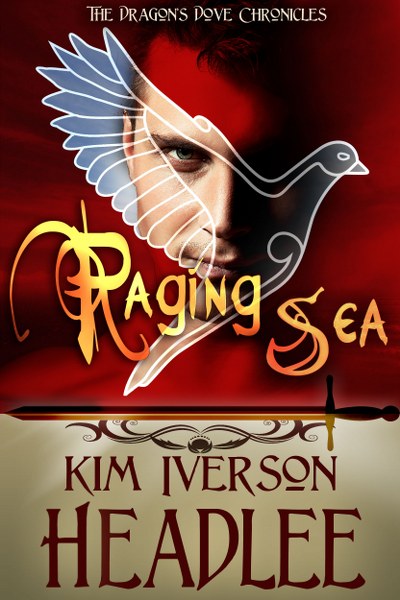
Raging Sea
The Dragon's Dove Chronicles Book 3
by Kim Iverson Headlee
Genre: Historical Fantasy 

Outcast, clanless, and but a junior officer in Arthur the Pendragon’s army, Angusel struggles to rebuild the life stolen from him through betrayal by the person he had held most dear. His legion allegiance thrusts him onto the campaign trail as one of Arthur’s forward scouts, stalking Angli troops and being among the first to clash with these vicious enemies at every turn. But the odds loom high against him and his sword-brothers, and they will need a miracle just to survive.


Pressured to make the best choice to ensure her clan’s future leadership, Eileann struggles with her feelings for Angusel, whose outcast status makes him forbidden to her as a mate. When Angli treachery threatens everyone she loves, she vows to thwart their violent plan to conquer her clan. But she is no warrior, she has no soldiers to command, and she will need a miracle just to survive.

How can one soldier make a difference? How can one woman save her kin and clan? In the crucible of combat, Angusel must surrender to the will of the gods, and Eileann must invoke divine power to forge the most dangerous warrior the world has ever known.


**only 99 cents!!**
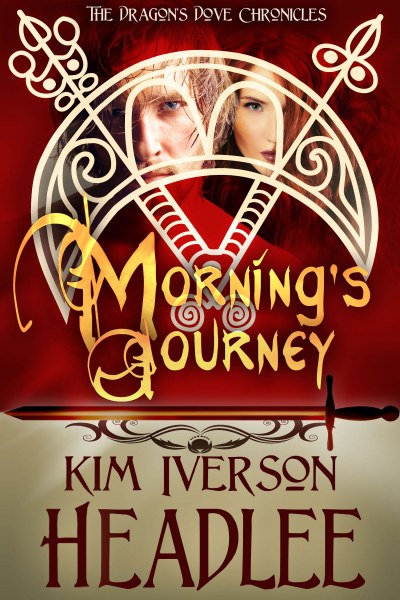


Morning's Journey
The Dragon's Dove Chronicles Book 2

Magnificent.” ~ Kathleen Foley, author of the Faith in Uniform series


In a violent age when enemies besiege Brydein and alliances shift as swiftly as the wind, stand two remarkable leaders: the Caledonian warrior-queen Gyanhumara and her consort, Arthur the Pendragon. Their fiery love is tempered only by their conviction to forge unity between their disparate peoples. Arthur and Gyan must create an impenetrable front to protect Brydein and Caledonia from land-lusting Saxons and the marauding Angli raiders who may be massing forces in the east, near Arthur’s sister and those he has sworn to protect.

But their biggest threat is an enemy within: Urien, Arthur’s rival and the man Gyan was treaty-bound to marry until she broke that promise for Arthur’s love. When Urien becomes chieftain of his clan, his increase in wealth and power is matched only by the magnitude of his hatred of Arthur and Gyan—and his threat to their infant son.

Morning’s Journey, sequel to the critically acclaimed Dawnflight, propels the reader from the heights of triumph to the depths of despair, through the struggles of some of the most fascinating characters in all of Arthurian literature. Those struggles are exacerbated by the characters’ own flawed choices. Gyan and Arthur must learn that while extending forgiveness to others may be difficult, forgiveness of self is the most excruciating—yet ultimately the most healing—step of the entire journey.
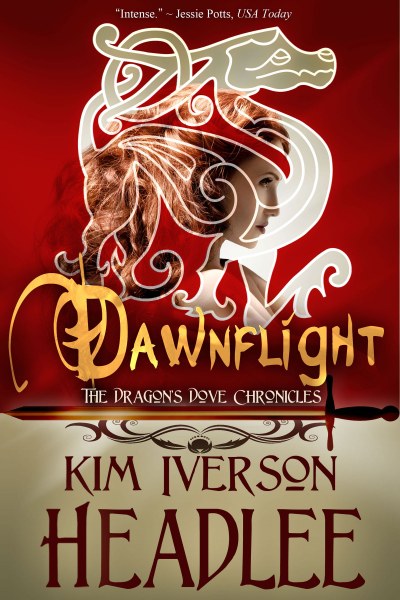


Dawnflight
The Dragon's Dove Chronicles Book 1

What if King Arthur’s queen was every bit as heroic as he was? Find out by immersing yourself in this epic story of the power couple whose courage and conviction would shape the destiny of a nation.


Gyan is a Caledonian chieftainess by birth, a warrior and leader of warriors by training, and she is betrothed to Urien, a son of her clan’s deadliest enemy, by right of Arthur the Pendragon’s conquest of her people. For the sake of peace, Gyan is willing to sacrifice everything...perhaps even her very life, if her foreboding about Urien proves true.

Roman by his father, Brytoni by his mother, and denied hereditary rulership of his mother's clan because of his mixed blood, Arthur has followed his father's path to become Dux Britanniarum, the Pendragon: supreme commander of the northern Brytoni army. The Caledonians, Scots, Saxons, and Angles keep him too busy to dwell upon his loneliness...most of the time.

When Gyan and Arthur meet, each recognize within the other their soul’s mate. The treaty has preserved Gyan’s ancient right to marry any man, providing he is a Brytoni nobleman—but Arthur does not qualify. And the ambitious Urien, Arthur’s greatest political rival, shall not be so easily denied. If Gyan and Arthur cannot prevent Urien from plunging the Caledonians and Brytons back into war, their love will be doomed to remain unfulfilled forever.

But there is an even greater threat looming. The Laird of the Scots wants their land and will kill all who stand in his way. Gyan, Arthur, and Urien must unite to defeat this merciless enemy who threatens everyone they hold dear.



Kim Headlee lives on a farm in southwestern Virginia with her family, cats, goats, Great Pyrenees goat guards, and assorted wildlife. People and creatures come and go, but the cave and the 250-year-old house ruins--the latter having been occupied as recently as the mid-twentieth century--seem to be sticking around for a while yet.


Kim has been a published novelist since 1999 with the first edition of Dawnflight (Sonnet Books, Simon & Schuster) and has been studying the Arthurian legends for nigh on half a century.



Follow the tour HERE for exclusive content and a giveaway!



Tuesday, February 12, 2019

My Interview with Author Jerome Charyn and a Giveaway of his New Book

Jerome Charyn, a master of lyrical farce and literary ventriloquism, published his first novel in 1964. A columnist for Charlie Hebdo, and the author of Johnny One-Eye, The Secret Life of Emily Dickinson, and dozens of other acclaimed novels and nonfiction works, he lives in New York.

Last week I hosted Jerome and included my review of his latest title THE PERILOUS ADVENTURES OF THE COWBOY KING. 

Purchase THE PERILOUS ADVENTURES on Amazon
Read my interview with Jerome, below. 


Have any favorite authors influenced your writing? Who were they? 
Emily Dickinson, William Faulkner, Vladimir Nabokov, Gabriel García Márquez 

What’s the strangest thing you have ever done in the name of research? 
Attending John Gotti’s trial, trying to stare him down.  He won.

Do you encounter any obstacles in writing? If so, how do you overcome them? 
The greatest obstacle is time.  It takes hours to fall into the music of language and you need those hours.
 
Do you start with an outline, index cards, etc., or write from the seat of your pants and make it up as you go along?
 
I start with the music of the first sentence.  If you find that magical first sentence, the novel is already written.

Where and when do you write? Tell us about your favorite work place and time.
 
I am always writing, even when I am not writing.

What is your advice to aspiring writers?
 
If you really love to write, don’t let anyone or anything get in your way.

Which book that you’ve read (not one of yours) is the closest to your heart? Why? 
 
Hamlet.  It has a genuine music of despair.

Some writers edit excessively as they write; others wait until a novel is finished to do the bulk of editing.  How about you? 
I revise every line every page every chapter from beginning to end.

If you could be dropped into any book as a character, who would you be and why? 
Hamlet (again.)  Just to hear the beauty of Shakespeare’s music.

What are you reading now?
 
I am reading a biography of Louise Brooks, my favorite actress.

Do you listen to music when writing or do you need silence?
 
I need silence.

Describe yourself in one word. 
Half-starved.


Tuesday, February 5, 2019

I'm Happy to Host Author Jerome Charyn

Jerome, a master of lyrical farce and literary ventriloquism, published his first novel in 1964. 
A columnist for Charlie Hebdo and the author of Johnny One-Eye, The Secret Life of Emily Dickinson, and dozens of other acclaimed novels and nonfiction works, he lives in New York.
Read on for my review of his latest title and check in next Tuesday for my in-depth interview 
with Jerome.


Jerome recently released THE PERILOUS ADVENTURES OF THE COWBOY KING: A NOVEL OF TEDDY ROOSEVELT AND HIS TIMES. When Rachel Gul of Over the River Public Relations asked me to host Jerome featuring this book, I knew this was no mere coincidence, because at this moment I'm writing my current biographical novel: FIRST LADY, FIRST DAUGHTER about Edith and Alice Roosevelt, Theodore's wife and oldest daughter.

Jerome is giving away copies of this book and his previous historical novel I AM ABRAHAM about Abraham Lincoln. Please Email me at diana@dianarubino.com if you'd like to enter to win. I will give a copies of the books to the first and second persons who can tell me the three historical figures they'd most want to meet. 


I was happy to read and review the book:

What Really Made Teddy (though he hated that nickname) Tick

Theodore was an author, politician, naturalist, and athlete, but he was a cowboy at heart. It always amazed me how a New York Knickerbocker aristocrat could adapt so naturally to the badlands, but Theodore took to it like he’d been born there. Jerome Charyn tells Theodore’s story as a memoir in first person, and his voice is not at all stiff or formal, as in the style of Theodore’s day and age. He tells us of his early life in Manhattan as a sickly asthmatic child whose doctors didn’t give him much time to live because of an alleged weak heart, and he defied them at every turn, taking up vigorous exercise, wrestling, and became fit and trim. 

We learn about his courtship and first marriage to Boston belle Alice Lee, who tragically died two days after giving birth to their daughter Alice, and to add to his grief, his mother died in the same house on the same day. He went against the custom of the time to court and marry his childhood sweetheart Edith Carow (widowers never remarried). 

He doesn’t go into great detail about his career as Assemblyman, Police Commissioner, governor of New York, Ass’t Secretary of the Navy, authorship of his many books, or having the Vice Presidency thrust upon him and subsequently the presidency after McKinley’s assassination, but tells us enough about it to let us know he’s still trying to find where his destiny lies. The bulk of the story is written about his exploits—the USS Maine, making a courtesy visit, was blown up in Havana Harbor and a few hundred Americans were killed. But President McKinley refused to declare war at first. A few days later, McKinley sent a declaration of war to Congress. Theodore wanted to serve as Lieutenant Colonel. His first U.S. volunteer cavalry became his Rough Riders, made up of a wide variety of men, cowboys, farmers, Indians, Mexicans, elites from the Ivy League colleges, socialites, and his brother-in-law. He had no trouble getting men to join. They flocked to him. His charge up San Juan Hill made him a hero. So, among all his other attributes, he was a military man—one of the most well-rounded figures in American history.


I recommend this book to anyone who’s already familiar with Roosevelt as president, but not with his life leading up to it. 

Purchase THE PERILOUS ADVENTURES on Amazon

Connect with Jerome:

Facebook
Twitter
The Perilous Adventures FB Page
The Perilous Adventures on Twitter


Wednesday, January 16, 2019

My Visit to Eliza Jumel's Mansion to Research my Book--I Made Eliza's Ghost Laugh!

Those of you who have seen the play Hamilton are now familiar with Aaron Burr's last wife, Eliza. She started out dirt poor in Providence and with her street smarts and business acumen, became  New York City's richest woman. Read about my visit to her mansion and my 'ghostly' experience:

Me on the Steps of the Jumel Mansion

In researching my biographical novel about Aaron Burr and his last wife, Madame Eliza Jumel, I visited her mansion in Washington Heights, NYC. It's beautifully restored and maintained, befitting the once-richest lady in New York. 

You can also hear the many stories of her ghost wandering the mansion in a purple gown, rapping on walls and windows, and yelling at schoolkids to shut up! 

One July night in 1833, Aaron, age 77, showed up at Eliza's door with the same minister who married him to his first wife Theodosia fifty years before. After several rejections of his proposal, she finally agreed to marry him in the front parlor (photo below). 


Front Parlor

When she realized he was a gold-digger (as by then, he was broke), she began divorce proceedings, also charging him with adultery, as he had a mistress in Jersey City. In an ironic twist, she hired Alexander Hamilton Jr. as her lawyer. But in the most ironic twist of all, he died the same day he received the final papers. 

When we visited, my husband Chris & I were on the 2nd floor where the bedrooms are. I was standing in the doorway of her bedroom (Aaron's is across the hall), and said out loud that I wondered if they ever slept together, or always in the separate rooms. Chris said, 'she was so old, and he was 80!'

I replied, 'Well, from what I've read of him, he could still get it up.'

A minute later, Chris asked me if I laughed after saying that. I definitely had not laughed.
That means somebody else did! He'd heard a woman's throaty chuckle, NOT my voice at all.


Aaron's Bedroom

We were the only (living) people up there at the time. I'm convinced it was Eliza, eavesdropping on us, and I was able to give her a laugh.
Have you ever heard of a ghost laughing? I never have! 
If you're ever in the area, visit the mansion--it's an unforgettable experience.

My biographical novel is titled ELIZA JUMEL BURR, VICE QUEEN OF THE UNITED STATES. I enjoyed researching this fascinating woman's life.

Purchase ELIZA on Amazon


Visit the Jumel Mansion website

Thursday, January 10, 2019

Meet Award-Winning Author Mary Anne Yarde and Read About The Du Lac Chronicles

I always enjoy hosting Mary Anne--she's written The Du Lac Chronicles, set a generation after the fall of King Arthur. They take you on a journey through Dark Age Briton and Brittany, where you will meet new friends and terrifying foes. Based on legends and historical fact, The Du Lac Chronicles is a series not to be missed.


Mary Anne is the founder of The Coffee Pot Book Club. She has been a professional reader since 2016. She has reviewed many books for the big and small publishing houses, as well as books penned by her fellow indie authors. Mary Anne is also an editorial reviewer for BooksGoSocial. Mary Anne has been a judge for a prestigious Historical Fiction Book Award for the last three years, as well as being a Top Reviewer on Netgalley. 

Born in Bath, England, Mary Anne grew up in the southwest of England, surrounded and influenced by centuries of history and mythology. Glastonbury — the fabled Isle of Avalon — was a mere fifteen-minute drive from her home, and tales of King Arthur and his knights were part of her childhood.


The inspiration behind The Du Lac Chronicles

What inspired you to write your book?

This is a question authors are often asked. The answers can be surprising. Story ideas usually start out as a quiet thought which niggles in the back of your head. Over time, this quiet thought becomes louder and louder until it can no longer be ignored. That is how it was for me, anyway.

I have been fascinated with the life and times of King Arthur and his Knights of the Round Table since I was a child — I guess growing up a stone’s throw from Glastonbury (The Ancient Isle of Avalon) may have influenced me somewhat. In Glastonbury, you cannot get away from Arthur. He is everywhere. It is where his story ends — If you believe those 12th Century pragmatic monks of Glastonbury Abbey.

The story of King Arthur is a tragic one. Arthur’s wife has an affair with his best friend — the ultimate betrayal. But while Arthur is in Brittany fighting Lancelot, Mordred takes Arthur’s throne for himself. Arthur learns of Mordred treachery. He abandons his fight with Lancelot and sails back to Briton. Arthur and Mordred meet at Camlann. Both men are mortally wounded in the battle that takes place there.  That is what the bards tell us, although with time the story has been added to, changed. In fact there is very little of the original story left. But I digress…

The King is dead…

And here Arthur’s story ends. This is also where the stories of his knights end. Everything ends at Camlann. Or does it?

After Camlann we are left with nothing but an empty throne and a prophecy. This prophecy states if Britain’s sovereignty were ever threatened then, Arthur and his Knights would ride again. Over a thousand years later and countless invasions, we are still waiting.  

But what if the prophecy had already come to pass? What if we were all waiting for something which had already happened?

My series The Du Lac Chronicles explores this possibility. But this is no wild fantasy story that I have penned. There are no dragons or wizards in my books — not in the true sense of the word. There are, however, Druids and Christian monks who can perform miracles. And there are men who are as brave as dragons and sometimes just as cruel. You see I wanted my books to be firmly planted in the historical Dark Ages, and I wanted to keep it as real in the telling as I could. However, to depict the Dark Ages is no easy feat.

What happened that made the Dark Ages so…well, Dark?

Hold on to your hats, here comes the history lesson… The Dark Ages was a time of change. A drastic change. In 476 C.E. the last emperor of the Western Roman Empire had been overthrown. The stability which the Roman Empire had brought to Western Europe for over 1000 years was no more. Can you even begin to imagine what that must have been like?

This dawning new era brings us some of the most fascinating historical figures that ever lived. These are not legendary figures, far from it. They were genuine historical men and women — and have they got a story to tell!

My series is not confined to the white cliffs on the North Downs. The Du Lac Chronicles is as much a story of France as it is of England. I wanted this to be an epic retelling, and as I am now writing book 5, I guess that is what I have created.

So back to the history…


The Roman Empire has fallen — what now?

As the Empire began to crumble, one Roman commander turned his back on Rome, and he took some of his men with him. That commander’s name was Clovis. It was at the Battle of Soissons 486 C.E. where he faced the Roman Army he was once a part of. To everyone’s surprise, or maybe not,  Clovis and his army won. But, Clovis’ ambition didn’t stop there. He wanted more. Roman Gaul and parts of Western Germany fell to him as well. He forged a new empire through blood, war, and marriage. He made Paris the capital of his new kingdom, and he was the first King of a united Frank (France).

But Clovis was not the only one who hankered after new territory. The Saxons, Jutes, Angles, and not forgetting the Frisians, crossed the South Sea to take advantage of vulnerable Britain who, since the Romans had left, had split back into various smaller kingdoms. There was much infighting and unrest. It was the perfect opportunity for these invaders to come over and stake their claim to this rich and fertile land.

While all this was going on, the Church — the last remnant of the Western Empire — was creeping into the crevices, and spreading the word of God and, what could be considered of equal value, one language — Latin. It could be argued that it was the Church which united Britain in the end.

What else was dark about the Dark Ages?

It is called the Dark Ages because it lacks primary sources, and contrary to popular belief it wasn’t just because events were not recorded. Brittany is a perfect example of what happened to these precious manuscripts. One word. Vikings. Unfortunately for historians, and authors like myself, the Vikings did more than pillage. They destroyed our primary sources. How inconsiderate!

So what was I to do? The answer was simple. I used what written sources I could find. I visited many historical sites, watched countless documentaries, and listened to many lectures, but still, I needed more, and I realised that in my search for the perfect setting with the perfect historical characters I had been chasing my tail. I ended where I started. I was back with that quiet thought, that whispered legend. The Dark Ages may be reluctant to give up her past, but folklore was more than generous. I realised that folklore is its own particular brand of history. Historians often overlook it because well, folklore is just stories. But I concluded that you could tell a lot about a people by the stories they used to tell. So I decided to combine history with folklore, and The Du Lac Chronicles was conceived. That quite thought, that quiet whisper, turned into a story which I have lived and breathed for over fifteen years.


The Du Lac Prophecy
(Book 4 of The Du Lac Chronicles)

Two Prophesies. Two Noble Households. One Throne.

Distrust and greed threaten to destroy the House of du Lac. Mordred Pendragon strengthens his hold on Brittany and the surrounding kingdoms while Alan, Mordred’s cousin, embarks on a desperate quest to find Arthur’s lost knights. Without the knights and the relics they hold in trust, they cannot defeat Arthur’s only son – but finding the knights is only half of the battle. Convincing them to fight on the side of the Du Lac’s, their sworn enemy, will not be easy.


If Alden, King of Cerniw, cannot bring unity there will be no need for Arthur’s knights. With Budic threatening to invade Alden’s Kingdom, Merton putting love before duty, and Garren disappearing to goodness knows where, what hope does Alden have? If Alden cannot get his House in order, Mordred will destroy them all.


Mary Anne loves to hear from readers, you can find her:  


Tuesday, January 8, 2019

FROM HERE TO FOURTEENTH STREET, A New York Romance--Coming Soon for Audio

Book One of the New York Saga

In FROM HERE TO FOURTEENTH STREET it's 1894 on New York's Lower East Side. Irish cop Tom McGlory and Italian immigrant Vita Caputo fall in love despite their different upbringings. They know their love can survive poverty, hatred, and corruption. Can an Italian sweatshop worker and an Irish cop fall in love on Manhattan’s Lower East Side in 1894? 

Vita is based on my great grandmother, Josephine Calabrese, "Josie Red" who left grade school to become a self-made businesswoman and politician, wife and mother. 

Coming soon on audio from The Wild Rose Press, it's for sale on Amazon for Kindle and paperback.


AN EXCERPT:

As Vita gathered her soap and towel, Madame Branchard tapped on her door. "You have a gentleman caller, Vita. A policeman."
"Tom?" His name lingered on her lips as she repeated it. She dropped her things and crossed the room.
"No, hon, not him. Another policeman. Theodore something, I think he said."
No. There can't be anything wrong. "Thanks," she whispered,  nudging Madame Branchard aside. She descended the steps, gripping the banister to support her wobbly legs. Stay calm! she warned herself. But of course it was no use; staying calm just wasn't her nature.
“Theodore something” stood before the closed parlor door. He’s a policeman? Tall and hefty, a bold pink shirt peeking out of a buttoned waistcoat and fitted jacket, he looked way out of place against the dainty patterned wallpaper.
He removed his hat. "Miss Caputo." He strained to keep his voice soft as he held out a piece of paper. “I’m police commissioner Theodore Roosevelt.”
"Yes?" Her voice shook.
"I have a summons for you, Miss Caputo." He held it out to her. But she stood rooted to that spot.
He stepped closer and she took it from him, unfolding it with icy fingers. Why would she be served with a summons? Was someone arresting her now for something she didn't do?
A shot of anger tore through her at this system, at everything she wanted to change. She flipped it open and saw the word "Summons" in fancy script at the top. Her eyes widened with each sentence as she read. “I can’t believe what I’m seeing.”
I hereby order Miss Vita Caputo to enter into holy matrimony with Mr. Thomas McGlory immediately following service of this summons.

HOW FROM HERE TO FOURTEENTH STREET WAS BORN

New York City’s history always fascinated me—how it became the most powerful hub in the world from a sprawling wilderness in exchange for $24 with Native Americans by the Dutch in 1626.

Growing up in Jersey City, I could see the Statue of Liberty from our living room window if I leaned way over (luckily I didn’t lean too far over). As a child model, I spent many an afternoon on job interviews and modeling assignments in the city, and got hooked on Nedick’s, a fast food chain whose orange drinks were every kid’s dream. Even better than the vanilla egg creams. We never drove to the city—we either took the PATH (Port Authority Trans Hudson) train (‘the tube’ in those days) or the bus through the Lincoln Tunnel to the Port Authority Bus Terminal.

My great grandmother, Josephine Calabrese, “Josie Red” to her friends, because of her abundant head of red hair, was way ahead of her time. Born in 1895 (but it could’ve been sooner, as she was known to lie about her age), she left grade school, became a successful businesswoman and a Jersey City committewoman, as well as a wife and mother of four. She owned apartment buildings, parking garages, a summer home, did a bit of Prohibition-era bootlegging, small-time loan-sharking, and paid cash for everything. When I began outlining From Here to Fourteenth Street, I modeled my heroine, Vita Caputo, after her. Although the story is set in New York the year before Grandma was born, I was able to bring Vita to life by calling on the family legends and stories, all word of mouth, for she never kept a journal.

Vita’s hero Tom McGlory isn’t based on any real person, but I did a lot of reading about Metropolitan Policemen and made sure he was the complete opposite! He’s trustworthy and would never take a bribe or graft. I always liked the name McGlory—then, years after the book first came out, I remembered that was the name of my first car mechanic—Ronnie McGlory.

I completed the book in 1995, and my then-publisher, Domhan Books, published it under the title I Love You Because. The Wild Rose Press picked it up after I gave it many revisions and overhauls. My editor Nan Swanson did a fabulous job making the prose sparkle.

CHANGING THE TITLE

When I proposed the story to Wild Rose, I wanted to change the title, since it went through so many revisions. I wanted to express Vita’s desire to escape the Lower East Side and move farther uptown. I considered Crossing 14th Street, but it sounded too much like Crossing Delancey. After a few more hits and misses, the title hit me—as all really fitting titles do.

A BIT OF BACKGROUND—WHAT WAS 1894 NEW YORK CITY LIKE?

The Metropolitan Police was a hellhole of corruption, and nearly every cop, from the greenest rookie to the Chief himself, was a dynamic part of what made the wheels of this great machine called New York turn. 
The department was in cahoots with the politicians, all the way up to the mayor's office. Whoever wasn't connected enough to become a politician became a cop in this city. They were paid off in pocket-bulging wads of cash to look the other way when it came to building codes, gambling, prostitution, every element it took to keep this machine gleaming and efficient. They oiled the machine and kept it running with split-second precision. The ordinary hardworking, slave-wage earning citizen didn't have a chance around here. Tom McGlory and his father were two of a kind, and two of a sprinkling of cops who were cops for the right reasons. They left him alone because he was a very private person; he didn't have any close friends, he confided in no one. He could've made a pocket full of rocks as a stoolie, more than he could by jumping in the fire with the rest of them, but he couldn't enjoy spending it if he'd made it that way. They knew it and grudgingly respected him for it. He was here for one reason--his family was here. If they went, he went. As long as they needed him, here he was. Da would stop grieving for his wife when he stopped breathing. Since Tom knew he was the greatest gift she gave Da, he would never let his father down.

Wednesday, January 2, 2019

New Year Special: FOR THE LOVE OF HAWTHORNE On Sale for Kindle at $0.57

Happy New Year, readers! Wishing you a year of marvelous books!

A snippet from my biographical romance thriller FOR THE LOVE OF HAWTHORNE, on sale for Kindle at $0.57 this week:


"I wondered when or if Nathaniel would ever finish THE SCARLET LETTER. He wrote so immensely I was almost frightened about it. But I knew his output depended on his long hours in the cold study, and this work also kept his grief at bay. I never disturbed him but for to deliver a plate of buttered bread with a glass of ale. I needed not ask how his writing fared. I could tell by the look in his eyes, how much he mumbled to himself, and whether he replied when I spoke to him. When I saw his shining look, I knew he'd produced enough to his satisfaction."


Purchase FOR THE LOVE OF HAWTHORNE on Amazon

Slideshow