Showing posts with label historical romance. Show all posts

Friday, March 6, 2026

New Release! NATHANIEL AND SOPHIA HAWTHORNE: OUR DESTINED BOND

I'm very happy to announce my latest release, NATHANIEL AND SOPHIA

 HAWTHORNE: OUR DESTINED BOND, about the Hawthornes' storybook romance

 with a paranormal twist.

UNIVERSAL LINK 

About NATHANIEL AND SOPHIA HAWTHORNE

Salem, Massachusetts witnessed horrific and shameful events in 1692 that haunted

 the town for three centuries. Accused as witches, nineteen innocent people were

 hanged and one was pressed to death. Judge John Hathorne and Reverend

 Nicholas Noyes handed down the sentences. One victim, Sarah Good, cursed

 Noyes from the hanging tree: “If you take away my life, God will give you blood to

 drink!” She then set her eyes on Judge Hathorne. “I curse you and your

 acknowledged heirs for all time on this wicked earth!” Hathorne was not only Sarah

 Good’s merciless judge; he also fathered her son Peter and refused to

 acknowledge him. 

In 1717, Nicholas Noyes choked on his own blood and died. Every generation after the judge continued to lose Hathorne land and money, prompting the rumor of a family curse. By the time his great great grandson Nathaniel was born, they faced poverty. 

Ashamed of his ancestor, Nathaniel added the ‘w’ to his last name. His novels and stories explore his beliefs and fears of sin and evil, and he based many of his characters on overbearing Puritan rulers such as Judge Hathorne. 

When Nathaniel first met Sophia Peabody, they experienced instantaneous mutual attraction. Sparks flew. He rose upon my eyes and soul a king among men by divine right, she wrote in her journal.

But to Sophia’s frustration, Nathaniel insisted they keep their romance secret for three years. He had his reasons, none of which made sense to Sophia. But knowing that he believed Sarah Good’s curse inflicted so much tragedy on his family over the centuries, she made it her mission to save him. Sarah was an ancestor of Sophia’s, making her and Nathaniel distant cousins—but she kept that to herself for the time being.

Sophia suffered severe headaches as a result of childhood mercury treatments. She underwent routine mesmerizing sessions, a popular cure for many ailments. Spirits sometimes came to her when mesmerized, and as a spiritualist and medium, she was able to contact and communicate with spirits. She knew if she could reach Sarah and persuade her to forgive Judge Hathorne, Nathaniel would be free of his lifelong burden.

Sarah’s son Peter had kept a journal the family passed down to the Peabodys. Sophia sensed his presence every time she turned the brittle pages and read his words. John Hathorne’s legitimate son John also kept a journal, now in the Hawthorne family’s possession. Living on opposite sides of Salem, Peter and John wrote in vivid detail about how the Salem trials tormented them throughout their lives.

Nathaniel finally agreed to announce their engagement, and married Sophia on July 9, 1842. They moved into their first home, The Old Manse in Concord, Massachusetts. Wanting nothing else but to spend the summer enjoying each other, we became Adam and Eve, alone in our Garden of Eden, Sophia wrote in her journal.

As success eluded Nathaniel, they lived on the verge of poverty. After being dismissed from his day job at the Salem Custom House, he wrote The Scarlet Letter, which finally gained him the recognition he deserved.

But the curse he believed Sarah cast on his family still haunted him. On a visit to his  cousin Susannah Ingersoll at The House of the Seven Gables, Sophia spotted a judge’s gavel. Out of curiosity Sophia picked it up and a shock ran through her as if electrified. She dropped it, instantly knowing it carried something evil. Susannah told her Judge Hathorne had used it during the trials.

Sophia urged Nathaniel to write a novel about the house, knowing it would be cathartic for him. While they lived in Lenox, Nathaniel finished writing The House of the Seven Gables. The Gothic novel explored all his fears and trepidations about the curse. He told Sophia, “Writing it, and especially reading it aloud to you lifted a tremendous burden off my shoulders. I felt it physically leave me. I carried this inside me since my youth and couldn’t bring it out to face it. And I have you, and only you, to thank.”

But he did not believe the curse could be lifted. 

At that moment Sophia knew what she needed to do. “We’re going to The Gables. Only there can I make sure Sarah forgives the judge.” She invited renowned spiritualist John Spear to The Gables. She explained that she needed to complete one final step to convince Nathaniel the curse was lifted.

At The Gables, John asked Susannah if anything in the room was connected to the witch trials. She retrieved the gavel and handed it to him. As John curled his fingers around the handle, he told them that the judge suffered lifelong anguish after condemning the victims. He didn’t publicly atone because he needed to carry out his duties as a judge. His energy, his essence, was still attached to the gavel.

He told Nathaniel that his belief in the curse fed this object, physically creating a monster.

Sarah herself did not curse his family—but the energy of all the anger, bitterness, venom and hatred in her words survived the centuries. That caused the misfortunes that befell him and his family. Only his final and unconditional forgiveness would end that. He urged Nathaniel to forgive Judge Hathorne. “You don’t have to say it out loud,” John said. “Just forgive him in your heart.”

Nathaniel bowed his head and whispered his forgiveness.

A ghostly mist formed in the doorway. Sarah conveyed to Sophia through the ether what she needed them to know. As she faded to nebulous mist and vanished, Sophia assured Nathaniel that his forgiveness of the judge now balanced out the suffering of the victims. 

She turned to the last page of Peter’s journal and saw words that were not there before: Dear John, I forgive you. Signed, Sarah Good.      

John Spear, Nathaniel and Sophia went to Judge Hathorne’s gravesite to give the journals and the gavel proper burial.

As they turned to leave, Nathaniel grasped her hand. “We’re going home, my Dove. And I don’t mean Salem or the Berkshires, but to where you and I started, as Adam and Eve. Back home. To our Garden of Eden in Concord.”


Monday, December 8, 2025

Read About My 1894 New York Romance FROM HERE TO FOURTEENTH STREET With an Italian Holiday Recipe


Happy Holidays With a Genuine Italian Recipe


Can an Italian sweatshop worker and an Irish cop fall in love on Manhattan’s Lower East Side in 1894? The answer is a big YES, and once they’re enjoying wedded bliss in their Greenwich Village brownstone, they spend their first Christmas together feasting on her strufoli (Italian for honey balls). 


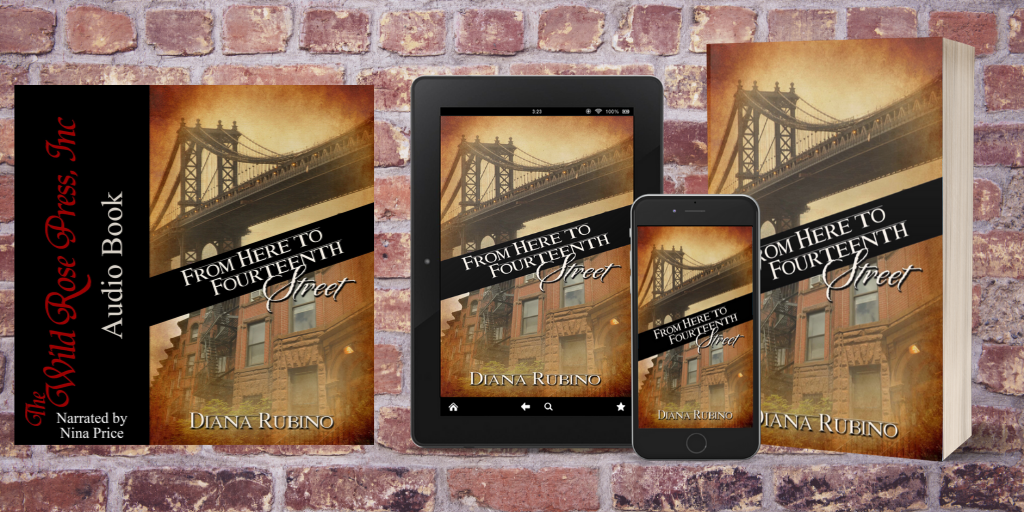
In FROM HERE TO FOURTEENTH STREET it's 1894 on New York's Lower East Side. Irish cop Tom McGlory and Italian immigrant Vita Caputo fall in love despite their different upbringings. They know their love can survive poverty, hatred, and corruption. 


getBook.at/NewYorkSagaBookOne

Here’s Vita’s Honey Balls recipe: 

When my grandparents came from Naples and landed at Ellis Island in the early 1900s they brought many recipes with them, but only in their heads. No one brought cookbooks or recipes along with their possessions. A favorite Christmas treat is Struffoli, better known as Honey Balls. One Christmas when I was a kid, I watched my grandmother make them and scribbled down the ingredients as she sifted and mixed and baked and drizzled. Here's an accurate recipe in English!

Ingredients
Dough:
•2 cups flour, plus extra for dusting
•1 large lemon, zested (about 2 teaspoons)
•1/2 large orange, zested (about 2 teaspoons)
•3 tablespoons sugar
•1/2 teaspoon fine sea salt
•1/4 teaspoon baking powder
•1/2 stick (2 ounces) unsalted butter, cut into 1/2-inch pieces, at room temperature
•3 large eggs
•1 tablespoon white wine, such as pinot grigio
•1 teaspoon pure vanilla extract
•Canola oil, for frying
•1 cup honey
•1/2 cup sugar
•1 tablespoon lemon juice
•1 1/2 cups hazelnuts, toasted (see Cook's Note)
•Vegetable oil cooking spray
•Sugar sprinkles, for decoration
•Powdered sugar for dusting, optional

Directions


For dough: In the bowl of a food processor, pulse together 2 cups of flour, lemon zest, orange zest, sugar, salt, and baking powder. Add the butter and pulse until the mixture resembles a coarse meal. Add the eggs, wine, and vanilla. Pulse until the mixture forms into a ball. Wrap the dough in plastic wrap and refrigerate for 30 minutes.


Cut the dough into 4 equal pieces. On a lightly floured surface, roll out each piece of dough until 1/4-inch thick. Cut each piece into 1/2-inch wide strips. Cut each strip of pastry into 1/2-inch pieces. Roll each piece of dough into a small ball the size of a hazelnut. Lightly dredge the dough balls in flour, shaking off any excess. In a large heavy-bottomed saucepan, pour enough oil to fill the pan about a third of the way. Heat over medium heat until a deep-frying thermometer inserted in the oil reaches 375 degrees F. (If you don't have a thermometer a cube of bread will brown in about 3 minutes.). In batches, fry the dough until lightly golden, about 2 to 3 minutes. Transfer to a paper towel-lined plate to drain. (The rested and quartered dough can also be rolled on a floured work surface into 1/2-inch thick logs and cut into equal-sized 1/2-inch pieces. The dough pieces can then be rolled into small balls and fried as above).


In a large saucepan, combine the honey, sugar, and lemon juice over medium heat. Bring to a boil, stirring occasionally, until the sugar is dissolved, about 3 minutes. Remove the pan from the heat. Add the fried dough and hazelnuts and stir until coated in the honey mixture. Allow the mixture to cool in the pan for 2 minutes.
Spray the outside of a small, straight-sided water glass with vegetable oil cooking spray and place in the center of a round platter. Using a spoon or damp hands, arrange struffoli and hazelnuts around the glass to form a wreath shape. Drizzle remaining honey mixture over the struffoli. Allow to set for 2 hours (can be made 1 day in advance). Decorate with sprinkles and dust with powdered sugar.

Remove the glass from the center of the platter and serve.

Note: To toast the hazelnuts, arrange in a single layer on a baking sheet. Bake in a preheated 350 degrees F oven 8 to 10 minutes. Cool before using.


Total Time: 4 hr 12 min
Prep: 1 hr 30 min
Yield: 8 to 10 servings


Monday, February 17, 2025

Meet Joan Koster, Another Author Who Celebrates Sassy Ladies, and Read About PRAIRIE CINDERELLA, Sculptress Vinnie Ream

I'm currently working on the 4th book in my "Sassy Ladies Series" and have found a kindred soul in Joan, whose series is called "Forgotten Ladies." I've read, enjoyed and highly recommend every one of them (see my Amazon reviews). Her newest release celebrates Vinnie Ream, the Victorian sculptress whose statue of Abraham Lincoln stands in the Rotunda of the U. S. Capitol.

About Joan

When she is not writing in her studio by the sea, Joan lives an 1860s farmhouse stacked to the ceiling with books. In a life full of adventures, she has scaled mountains, chased sheep, and been abandoned on an island for longer than she wants to remember. 

An ethnographer, educator, and award-winning author who loves mentoring writers, Joan blends her love of history, and romance into eye-opening historical novels about women who shouldn’t be forgotten and into romantic thrillers under the pen name, Zara West. She is the author of the award-winning romantic suspense series The Skin Quartet and the top-selling Write for Success series, and of multi-award-winning biographical historicals  including THAT DICKINSON GIRL, CENSORED ANGEL, and now PRAIRIE CINDERELLA.

Joan blogs at JoanKoster.com, American Civil War Voice, Zara West Romance, and Zara West’s Journal and teaches numerous online writing courses. 

An Excerpt From PRAIRIE CINDERELLA


The Capitol, Washington City, April 1866

“Ah, this is where you hide out.”

I snap my head up. The woman is a stranger, but I can tell she hasn’t come to make a purchase or praise my work. Beneath her fashionable hat, adorned with bunches of fake cherries, she wears the nose-pinched expression of someone smelling not the rose petal potpourri discreetly placed around the studio, but the stench of something foul.

She moves along the wall, studying the medallions on display. “These are yours, Miss Ream?” She glares at me. “You are Miss Ream, I presume?”

I grab the wet rag hanging on a hook by my work stand and wipe the clay dust from my fingers. “Vinnie Ream, at your service. All the works here are mine. And available for purchase.”

She puts on spectacles and peruses my newest work—the bust of a bare-breasted young woman, which I’ve christened Violet.

The woman straightens. “Heard about you. Had to see for myself.” She gives me a long stare. “I’m Jane Swisshelm.”

A polite greeting sticks in my throat. Everyone has heard of the razor-tongued, overly opinionated journalist who gave her all to the wounded soldiers during the war but then had the distinction of being fired by both Horace Greeley and the War Department for being too radical in her news articles.

I curtsy and force out a response. “You are most welcome to my little studio, Mrs. Swisshelm.”

“Little studio? You’re right here in the Capitol. That’s an honor deserving of a renowned artist like Clark Mills, not you. You look to be all of fourteen. But buxom enough, I guess. And all that hair. No wonder the men are rapturous about you. Be forewarned: I am not so easily persuaded by a bit of feminine fluff.”

She sails across to my bust of Lincoln and places her hand on top of the head as if my most important work is nothing more than a doorpost. “Heard you’re claiming the President himself posed for you?”

How dare this woman accuse me of lying? I bite out the words, “He did.”

“Well, my good friend, Mary Todd, disagrees. Says she’s never heard of you.”

“My arrangement was with the President and his secretary.”

“So you say.” She clasps her hands in front of her own less-than-generous bosom. “I’m here to tell you to drop the petition you’re circulating. You have no right to make a marble sculpture of him.”

I should grovel. Pretend to think about her suggestion. After all, I’m not sure what I am going to do. But I can’t. The woman reminds me too much of Ma and her dictates. So, I throw back my shoulders and firm my voice. “You can’t tell me how to pursue my career.”

She comes closer. “Give up the petition, or I’ll spread the rumor that your obscene woman in the shop window is actually you. A self-portrait, shall we say.”

“What? Are you blind? That looks nothing like me. That is a classical pose based on numerous renowned works of art.”

“It is unsuitable for you to show such nakedness, and an insult to all women. Men do not need their lust stirred by bared breasts.”

“It is a most appropriate work to be created by a woman. Why should only men be allowed to sculpt our sex? No one criticizes them for sculpting nude males.”

Her lips pinch together. “The only reason to create nudes of either sex is to titillate.”

“The human body is beautiful and wondrous. It must be. After all, the Lord has modeled a good many people in the nude.”

Swisshelm sneers. “Our good Lord has no place in this den of obscenity or in this discussion. Mark my words. If you continue the course you have set for yourself, you will be rebuffed in society.”

“Society, as you call it, doesn’t accept me now—an upstart girl from the wild prairie who works with her hands. But people who value excellent artwork support me with their pocketbooks.” Poker-hot anger overrides my commonsense. “Long after you are gone and your newspaper turned to dust, Mrs. Swisshelm, my work—nude or dressed—will endure. Do your worst. I’m going to get that commission.”

To learn more about Jane Swisshelm see my article: “Jane Gray Swisshelm on Congressional Behavior.”

To learn more about Vinnie Ream see my article “Vinnie Ream on Art and Nature.”


Why Joan wrote PRAIRIE CINDERELLA: The Story of American Sculptress Vinnie Ream Hoxie

Vinnie Ream was both celebrated and reviled in her lifetime. She was petite, outgoing, and female. The fact that she wanted to be a sculptress at a time when the art world was dominated by men who believed only European-trained artists were the best is what makes her success more incredible.

Yes, some of her success was due to chance. Because she was born in a log cabin like him, Abraham Lincoln at the height of the Civil War gave her permission to sketch and sculpt him during his afternoon naps. After his assassination, at the age of seventeen, she rose to prominence for her bust of him done from life. This led to her receiving the first sculpture commission given by Congress to a woman. Today, her statue of Lincoln stands in the Rotunda of the U. S. Capitol, where it is often seen during state occasions.

But it was not all chance. Vinnie Ream was an amazingly gifted woman who despite her lack of training excelled in art. She was also personable and smart.

Of course, such an accomplishment was questioned. How could a young girl sculpt the body of man? (Remember this was the Victorian age.) How could a frontier-raised American, who'd never been to Europe, be any good at sculpture? How did she get Congress to give her a studio in the Capitol and to vote her $10,000 plus a $5,000 bonus for Lincoln’s statue?

Naturally rumors flew. Some man did the work for her. She never met Lincoln. She traded favors with Congressmen to get the commission. Mark Twain went so far as to call her “the smartest politician of all.” This was to be expected at the time. What surprised me was that these claims are still made today by academics who wink and nod when they talk about her. That got me angry and that is why I wrote this novel.

In PRAIRIE CINDERELLA, I have tried to portray her as a complex woman who was driven to create but who also gave her all to take care of the people she loved. There are two love stories in this novel, and a happy ending. Vinnie Ream was amazing. I hope you will read Prairie Cinderella and come to love her as much as I do.

Purchase PRAIRIE CINDERELLA

Books2Read

Amazon

Kobo


         Connect With Joan

Website

Amazon Author Page

BookBub

Facebook

Goodreads

Instagram

LinkedIn

Pinterest

Research Gate

Twitter


Thursday, January 16, 2025

PROHIBITION--the 19th AMENDMENT--RATIFIED ON THIS DAY IN 1919

On this day in 1919, the 18th Amendment to the U.S. Constitution, prohibiting the “manufacture, sale, or transportation of intoxicating liquors for beverage purposes,” was ratified by the requisite number of states. My romance thriller BOOTLEG BROADWAY is set during this wild era. More booze flowed during Prohibition than when it was legal! When I first created the characters, I had nothing for them to do yet--I just knew I had to get my hero, the scatterbrained musical genius Billy McGlory, into one mess after another, each worse than the one before. The ending surprised even me--and I wrote it! It was an amazing era to research, especially in boozy New York City. It's Book Two of the New York Saga.

A 5-star Amazon review:

The Cat's Pajamas

Diana Rubino had me on the first page, and didn't let go until the end. Her writing evokes Depression-era New York City richly and thoroughly, from the rhythm of the language to the sounds on the street. You can practically hear the music and the clinking of glasses in the speakeasies.


Billy McGlory is a train wreck in the best possible sense. Ms. Rubino has written a brilliantly flawed character whose good intentions spin slowly but inevitably out of control. I couldn't stop tracking his descent into hell and wondering, as he does, how he'd get out of this. A beautiful character study and a fascinating story of the American Thirties in all their danger and dazzle. Bravo!

It's in print, on Kindle, and on audio with the animated New York native Nina Price.

getBook.at/NewYorkSagaBookTwo


Wednesday, June 28, 2023

Who Killed President Kennedy? I No Longer Believe a Theory...But My Novel is Still in Print!

November 22, 1963, a day that changed America forever. Who killed President Kennedy?

 I've been a HUGE Kennedy assassination buff since that very day. Everyone who was alive on November 22, 1963 knew exactly where they were and what they were doing when they heard the news. I was in my first grade classroom. The teacher got a call on the classroom phone and told us ‘the president was shot.’ A collective gasp went around the room. I was 6 years old and in first grade. It was ten years before I saw the footage of Ruby shooting Oswald, on an anniversary documentary.

But it was my grandmother who got me interested in the biggest mystery since 'who killed the princes in the Tower?' (I'm a Ricardian; that's for another post).  She got me embroiled right along with her.

She listened to all the radio talk shows (those who lived in the New York area might remember Long John Nebel, on AM radio (FM was really 'out there' at that time).

She recorded all the radio talk shows. She bought whatever books came out over the years, along with the Warren Commission Report, which I couldn't lift at the time, it was so heavy. But my interest never waned in the 51 years that followed.


     In 2000, I began the third book of my New York Saga, set in 1963. The heroine is Vikki McGlory Ward, daughter of Billy McGlory, hero of the second book, BOOTLEG BROADWAY, set during Prohibition. This was my opportunity to write a novel showcasing all my current theories, and continue the saga. It took a minimum of research, since I remember all the 60's brands, (Bosco, Yum Berry, Mr. Bubble...), the fashions, the songs, and I even included a scene set on that unforgettable night when the Beatles first appeared on the Ed Sullivan Show, February 9, 1964.

I NO LONGER BELIEVE THE CONSPIRACY THEORIES

Oliver Stone's 'back and to the left' theory is classic Hollywood but didn't convince me of another assassin on the grassy knoll. 

For 50 years I believed the Mafia were intent on taking him out, and set LHO (Lee Harvey Oswald) up. As he said 'I'm just a patsy' I always believed that, I didn't even believe he was on the 6th floor of the Book Depository Building at that time. BUT...on the 50th anniversary I watched a few new shows, and now do firmly believe LHO acted alone.

For one thing, regarding my mob theory: I now know the mob doesn't do hits, especially high profile ones, in public, and they wouldn't have trusted that cheap old rifle LHO used. I read all the mob books where they brag about taking JFK out -- 'set up a nut to take the blame', etc... and I fell for it hook line & sinker.

Mainly cause I knew the mob had it in for the Kennedys, especially Bobby. Too bad the father never sat his sons down & said 'don't mess with these guys!'

But now I do believe LHO acted alone; his motive, twisted as it was, was to be a hero in Cuba & get into their good graces. He thought Fidel Castro would welcome him with open arms. 

Also, If he was set up and a patsy, why did he kill Officer Tippit on the street? That was completely unnecessary. He was just a cold blooded killer.

I don't believe the 2nd (or 3rd) assassin theory either. No ballistics to show anything except from LHO's rifle.

I have a theory I NEVER heard anyone mention--what if there WERE two assassins (LHO and another on the knoll or in the the Dal Tex Bldg or the sewer) and neither knew the other existed? They just both decided to take JFK out that day & time. But obviously one of them missed. :)


About THE END OF CAMELOT 


The third in the New York Saga, The End of Camelot centers on Billy McGlory’s daughter Vikki, whose husband is murdered trying to prevent the assassination of John F. Kennedy. Vikki uses her detective skills to trace the conspiracy, from New York to New Orleans to Dallas, and at the same time, tricks her husband’s murderer into a confession. A romance with her bodyguard makes her life complete.

November 22, 1963: The assassination of a president devastates America. But a phone call brings even more tragic news to Vikki Ward—her TV reporter husband was found dead in his Dallas hotel room that morning.

Finding his notes, Vikki realizes her husband was embroiled in the plot to kill JFK—but his mission was to prevent it. When the Dallas police rule his death accidental, Vikki vows to find out who was behind the murders of JFK and her husband. With the help of her father and godfather, she sets out to uncover the truth.

Aldobrandi Po , the bodyguard hired to protect Vikki, falls in love with her almost as soon as he sets eyes on her. But he's engaged to be married, and she’s still mourning her husband. Can they ever hope to find happiness in the wake of all this tragedy?

Purchase THE END OF CAMELOT on Amazon


Excerpt:

It was New Year’s Eve, they were alone, and he was harmless. So far. So she took the necessary two paces over to him and placed the honey ball between his custom-made choppers.

He closed his eyes, and she watched him savoring the sweetness. She didn’t dare say another word as she ran her index finger over a glob of cream on the cannoli plate, raised it to her lips and licked. “Mmmm,” she voiced, wishing she hadn’t.

Their eyes met and locked. Faster than lightning, they came together like magnets. Their lips met, sweet and sticky and hot. She didn’t want him to stop, but her inner voice screamed how wrong it was—It’s forbidden!—echoing the nuns in Saint Gustina’s. She shooed it away like an annoying fly. Leave me alone, I’m not a kid anymore. Her arms circled his neck, and his hands slid down to the curve of her back. Dare she move in closer, pelvis to pelvis, an unthinkable act three seconds ago? Her body was betraying her, betraying Jack, taking on a will of its own as she crushed herself to him. The kiss intensified. She tasted cannoli, and her fogged mind told her he’d been sampling them all day. She breathed in his cologne, so foreign it repelled her, so new it aroused her even further. Her tiara slipped off her head. She caught it just as he pulled away.

He held her at arm’s length as in a tango. “Oh, cara mia,” he growled—and if he said another word in Italian, she knew she’d explode. A passion long dormant stirred inside her.

My favorite passage from the book:

Billy came down the stairs for a nightcap and glanced into the living room. He noticed the glow in the fireplace, Vikki’s eyeglasses and the anisette bottle on the table. The couch faced the other way, but nobody was sitting on it. “Where’d they go?” Then he realized they hadn’t gone anywhere—and they were on the couch, but not sitting. Before he got out of their way, he placed a long-playing record on the phonograph. Jackie Gleason’s “For Lovers Only.”


Thursday, February 23, 2023

Meet Rachel Brimble and Read About Her Newest Victorian Romance, VICTORIA AND VIOLET (The Royal Maids Book One)


Rachel is a fellow Wild Rose Press author, and she hosted me on her blog the other day. I'm reciprocating, as I enjoy hosting authors of any genre. Meet Rachel, her heroine Violet Parker, her hero James Greene, and the overwhelming odds they overcame to fall in love!

About Rachel

Rachel lives in a small town near Bath, England. She is the author of 29 novels including the Ladies of Carson Street trilogy, the Shop Girl series (Aria Fiction) and the Templeton Cove Stories (Harlequin). Her latest novel, Victoria & Violet was released 17th October 2022.

Rachel is a member of the Romantic Novelists Association as well as the Historical Novel Society and has thousands of social media followers all over the world. 

About Victoria & Violet


It should be a dream come true to serve the Queen of England…

When Violet Parker is told she will be Queen Victoria’s personal housemaid, she

cannot believe her good fortune. She finally has the chance to escape her

overbearing mother, a servant to the Duchess of Kent.

Violet hopes to explore who she is and what the world has to offer without her

mother’s schemes overshadowing her every thought and action.

Then she meets James Greene, assistant to the queen's chief political adviser,

 Lord Melbourne. From entirely different backgrounds and social class, Violet and

James should have neither need nor desire to speak to one another, yet through

their service, their paths cross and their lives merge--as do their feelings. Only

Victoria's court is not always the place for romance, but rather secrets, scandals,

and conspiracies...


Five Reasons You Should Read Victoria & Violet 

Victoria & Violet is my 28th novel and the first book I have written that includes real people and real events – to do this was a long-held ambition of mine that has finally come to fruition, and I loved writing every word. Now I pray readers will take it into their hearts just as deeply as I have…

Reasons to read:

1)      If you are a fan of British period dramas, then this is the book for you! I am period drama obsessed, and they inevitably influence my writing. As you follow Victoria, Violet and hero James on their journey and burgeoning relationships, you will find yourself embroiled in ample story threads that lead to satisfying doses drama, intrigue & romance!

2)      If you love British royal history (especially Queen Victoria, of course!) – I have included many real events that occurred in the early reign of Queen Victoria and take you right into her heart and mind as they are unfolding. The book is told from her housemaid’s point of view, so I hope it feels like a new and unique incite into events that you have heard about, but maybe did not know too much.

3)      Violet Parker – Violet is without doubt one of my favorite heroines ever. When the book opens, she is in an unbearable situation under the control of her mother and Victoria’s mother, the Duchess of Kent. However, despite her nervousness and fear, the reader quickly gets a sense of Violet’s steeliness, too. Writing her character growth was a joy and I came to admire her so very much.

4)      The settings – another reason I loved writing this book was the chance to re-create Buckingham Palace and Windsor Castle in 1839. I have been lucky enough to visit both of these royal palaces over the last few years, and it wasn’t hard to imagine what might or might not have changed over the last 180 years or so. My imagination went into overdrive, and it was wonderful…

5)      James Greene – if I’m honest James was a little bit of an enigma to me when I was writing the first draft of this book. He was there, I could see him, hear his voice and see certain cheeky mannerisms, but I couldn’t quite get into his heart. That all changed when I took him back to his family home in Oxfordshire. When he is at Cassington Park, James cannot hide his vulnerabilities and flaws – that was when I fell in love with him and I hope readers do, too…

Purchase Victoria & Violet

Connect with Rachel

Website

Twitter

Facebook

Instagram

Click here to sign up for Rachel's newsletter (a guaranteed giveaway every month)

Monday, November 21, 2022


THE END OF CAMELOT

My Historical Mystery Romance 

November 22, 1963, a day that changed America forever. Who killed President Kennedy?

 I've been a HUGE Kennedy assassination buff since that very day. Everyone who was alive on November 22, 1963 knew exactly where they were and what they were doing when they heard the news. I was in my first grade classroom. The teacher got a call on the classroom phone and told us ‘the president was shot.’ A collective gasp went around the room. I was 6 years old and in first grade. It was ten years before I saw the footage of Ruby shooting Oswald, on an anniversary documentary.

          But it was my grandmother who got me interested in the biggest mystery since 'who killed the princes in the Tower?' (I'm a Ricardian; that's for another post).  She got me embroiled right along with her.

          She listened to all the radio talk shows (those who lived in the New York area might remember Long John Nebel, on WOR, WNBC, and WMCA, all on AM radio (FM was really 'out there' at that time).


          She recorded all the radio talk shows. She bought whatever books came out over the years, along with the Warren Commission Report, which I couldn't lift at the time, it was so heavy. But my interest never waned in the 51 years that followed.


          In 2000, I began the third book of my New York Saga, set in 1963. The heroine is Vikki McGlory Ward, daughter of Billy McGlory, hero of the second book, BOOTLEG BROADWAY, set during Prohibition. This was my opportunity to write a novel showcasing all my current theories, and continue the saga. It took a minimum of research, since I remember all the 60's brands, (Bosco, Yum Berry, Mr. Bubble...), the fashions, the songs, and I even included a scene set on that unforgettable night when the Beatles first appeared on the Ed Sullivan Show, February 9, 1964.

About THE END OF CAMELOT 


The third in the New York Saga, The End of Camelot centers on Billy McGlory’s daughter Vikki, whose husband is murdered trying to prevent the assassination of John F. Kennedy. Vikki uses her detective skills to trace the conspiracy, from New York to New Orleans to Dallas, and at the same time, tricks her husband’s murderer into a confession. A romance with her bodyguard makes her life complete.

November 22, 1963: The assassination of a president devastates America. But a phone call brings even more tragic news to Vikki Ward—her TV reporter husband was found dead in his Dallas hotel room that morning.

Finding his notes, Vikki realizes her husband was embroiled in the plot to kill JFK—but his mission was to prevent it. When the Dallas police rule his death accidental, Vikki vows to find out who was behind the murders of JFK and her husband. With the help of her father and godfather, she sets out to uncover the truth.

Aldobrandi Po , the bodyguard hired to protect Vikki, falls in love with her almost as soon as he sets eyes on her. But he's engaged to be married, and she’s still mourning her husband. Can they ever hope to find happiness in the wake of all this tragedy?

Purchase THE END OF CAMELOT on Amazon


Excerpt:

It was New Year’s Eve, they were alone, and he was harmless. So far. So she took the necessary two paces over to him and placed the honey ball between his custom-made choppers.

He closed his eyes, and she watched him savoring the sweetness. She didn’t dare say another word as she ran her index finger over a glob of cream on the cannoli plate, raised it to her lips and licked. “Mmmm,” she voiced, wishing she hadn’t.

Their eyes met and locked. Faster than lightning, they came together like magnets. Their lips met, sweet and sticky and hot. She didn’t want him to stop, but her inner voice screamed how wrong it was—It’s forbidden!—echoing the nuns in Saint Gustina’s. She shooed it away like an annoying fly. Leave me alone, I’m not a kid anymore. Her arms circled his neck, and his hands slid down to the curve of her back. Dare she move in closer, pelvis to pelvis, an unthinkable act three seconds ago? Her body was betraying her, betraying Jack, taking on a will of its own as she crushed herself to him. The kiss intensified. She tasted cannoli, and her fogged mind told her he’d been sampling them all day. She breathed in his cologne, so foreign it repelled her, so new it aroused her even further. Her tiara slipped off her head. She caught it just as he pulled away.

He held her at arm’s length as in a tango. “Oh, cara mia,” he growled—and if he said another word in Italian, she knew she’d explode. A passion long dormant stirred inside her.

My favorite passage from the book:

Billy came down the stairs for a nightcap and glanced into the living room. He noticed the glow in the fireplace, Vikki’s eyeglasses and the anisette bottle on the table. The couch faced the other way, but nobody was sitting on it. “Where’d they go?” Then he realized they hadn’t gone anywhere—and they were on the couch, but not sitting. Before he got out of their way, he placed a long-playing record on the phonograph. Jackie Gleason’s “For Lovers Only.”


Wednesday, July 20, 2022

Meet Regency Author Maggie Sims and Read About Her New Title SOPHIA'S SCHOOLING, School of Enlightenment, Book One

Maggie is one of my fellow Wild Rose Press authors, and we're both very happy with WRP (I've been with them since 2010). Meet Maggie here and check out her new Regency romance, released in May.

About Maggie:

Maggie began her love affair with romance before her teen years, drawn to the Regency by her mum’s British influence. In her twenties, she did her best to live the Carrie Bradshaw life in New York City, albeit with less expensive shoes and more books.

Despite reading hundreds of romance novels in her life, she was still blown away when she met the love of her life, an ex-Marine cinnamon roll with creative woodworking and culinary skills.

Having retired from corporate life, they live in Central Texas and are parents to a varying number of dogs and cats.  When not writing, Maggie is a wine enthusiast, a travel junkie, and a romance reading fiend.  She also sporadically crochets for KnotsofLove.org and does just enough exercise for that second glass of wine at night.

To find out more about Maggie’s latest reads, favorite wines, and travel destinations, sign up for her newsletter and follow her on social media.

An Additional Note From Maggie:

I would love to talk about all things romance, wine, and travel with readers, and to introduce everyone to my world.  The deliciously steamy Regency series centers around a unique finishing school where young women learn to take their future and their pleasure in their own hands. Sophia's Schooling , Book 1 of the School of Enlightenment is out, and Book 2 releases October 19. To get an early glimpse of this world, sign up for my newsletter and get a free prequel.

Connect with Maggie:

Newsletter Signup 

Instagram

Twitter 

Facebook


About SOPHIA'S SCHOOLING

1816 - London

Orphaned at eighteen, Sophia has learned love means loss.  Now she must leave her country home to navigate the opulence of the London Season, although she has no desire for romance or a husband.

Edward, the newest Earl of Peterborough, is struggling with the business of his family estate. He has shunned marriage due to a shameful secret, but with his title comes the need for heirs.

Despite their misgivings, Sophia and Edward cannot resist their attraction.  When she accidentally discovers his penchant for spankings, her curiosity is her undoing.  A clandestine meeting risks a scandal. Only marriage to a reluctant bridegroom can save her reputation. But perhaps the School of Enlightenment can give her an education in love.

Purchase SOPHIA'S SCHOOLING

Excerpt:

An innocent country girl...a jaded earl...an education in pleasure.

Edward gave a mental snort. “You continue to disobey orders.”

Sophia groaned in frustration, probably suspecting where his statement was leading. “I’m very sorry.” She sucked in a breath. “I shan’t do it again. As I came out alone, I thought it would be safe.” She sent him a sidelong glance. “Is this a punishable offense, my lord?”

Perfect. She knew she was wrong. She saw what was coming. Her side-eyed glance told him she mayhap even invited it. Who was he to refuse a girl a spanking?

He took a deep breath, wishing… No. She’s not mine to covet. But she is mine to punish tonight.

His eyes shuttered as he considered. Was he taking advantage of her naiveté about Ton rules? He knew she’d enjoyed the last punishment and could not deny either of their desires. He almost heard the turn of the key as his conscience was again locked away.

He pushed, “We have been over this, Sophia. Punishment is an important learning tool. Hopefully, it shall be an incentive for you to obey specific directions in the future.”

Frustrated, she crossed her gloved arms. “Darn it. My feet hurt so much. I did not anticipate my bottom becoming sore, too. I shan’t be able to sit or stand comfortably.”

That wasn’t a no.


Thursday, December 16, 2021

A Tradition of Christmas Past: Spaghetti Aglio e Olio Recipe, and My Italian Heroine, Based on my Great Grandmother

My great grandmother was the matriarch of the family, the mother of my grandfather. “Josie Red” as she was known in downtown Jersey City was way ahead of her time, as a bootlegger during Prohibition, a real estate tycoon, a small-time loan shark, and according to legend, Mayor Hague’s mistress!

Every Christmas Eve, her daughter, my great aunt Lucretia, a gourmet cook, invited everyone to her basement for an Italian feast. Grandma’s four children were grown with children and grandchildren of their own. Of course this necessitated a ‘kiddie table’ at which I sat until I was tall enough to sit with the grown-ups. Aunt Lucretia always made two types of spaghetti sauce—regular marinara sauce and aglio e olio—but what I remember is it always contained clam sauce, which I wouldn’t touch, so I went for the plain and safe marinara. Her finished basement had a small kitchen so she was able to do all the cooking right there. Kiddies weren’t allowed to, but several adults helped her carry the steaming plates to the long tables set up and covered with holiday-themed tablecloths. She served all the traditional Italian dishes—after the pasta came the ham, then the fruit and nuts, and of course, an array of desserts, always including her famous struffoli (honey balls) and Italian rum cake. My Uncle Eddie tended bar at the other end of the room. Thankfully, he’s still with us at 84.

After dinner, Santa always showed up. My cousin Mike’s father played the part very convincingly—the kiddies scrambled onto his lap for their chance to gush about how good they behaved all year and how deserving they were of his visit later that night to surround their Christmas trees with presents to be torn open the next morning. Someone always had a home movie camera to capture these special moments on film. I remember the lights always blazing like the noonday sun when the camera started rolling.

After leaving the party, I always went to Midnight Mass with my friends and someone always threw a party after that.

Christmas Eves in the basement ended after Grandma left us, but the memories live on!

Vita Caputo, the heroine of my 1894 New York City romance FROM HERE TO FOURTEENTH STREET, is based on my great grandmother. It’s now on audio with the expressive voice of New York native Nina Price.


Purchase FROM HERE TO FOURTEENTH STREET

Recipe for Spaghetti Aglio e Olio 


Ingredients: 

One pound uncooked spaghetti

6 cloves minced garlic

½ cup olive oil

¼ teaspoon red pepper flakes

Salt and ground black pepper to taste

¼ cup chopped fresh parsley

1 cup finely grated Parmigiano-Reggiano cheese

 Directions

  1. Bring a large pot of lightly salted water to a boil. Cook spaghetti in the boiling water, stirring occasionally until cooked through but firm to the bite, about 12 minutes. Drain and transfer to a pasta bowl.
  2. Combine garlic and olive oil in a cold skillet. Cook over medium heat to slowly toast garlic, about 10 minutes. Reduce heat to medium-low when olive oil begins to bubble. Cook and stir until garlic is golden brown, about another 5 minutes. Remove from heat.
  3. Stir red pepper flakes, black pepper, and salt into the pasta. Pour in olive oil and garlic, and sprinkle on Italian parsley and half of the Parmigiano-Reggiano cheese; stir until combined.
  4. Serve pasta topped with the remaining Parmigiano-Reggiano cheese.


Friday, December 3, 2021

My Italian Heroine and Her Honey Balls Holiday Recipe

Can an Italian sweatshop worker and an Irish cop fall in love on Manhattan’s Lower East Side in 1894? The answer is a big YES, and once they’re enjoying wedded bliss in their Greenwich Village brownstone, they spend their first Christmas together feasting on her strufoli (Italian for honey balls). 

In FROM HERE TO FOURTEENTH STREET it's 1894 on New York's Lower East Side. Irish cop Tom McGlory and Italian immigrant Vita Caputo fall in love despite their different upbringings. They know their love can survive poverty, hatred, and corruption. 


getBook.at/NewYorkSagaBookOne

Here’s Vita’s Honey Balls recipe:


When my grandparents came from Naples and landed at Ellis Island in the early 1900s they brought many recipes with them, but only in their heads. No one brought cookbooks or recipes along with their possessions. A favorite Christmas treat is Struffoli, better known as Honey Balls. One Christmas when I was a kid, I watched my grandmother make them and scribbled down the ingredients as she sifted and mixed and baked and drizzled. Here's an accurate recipe in English!

Ingredients
Dough:
•2 cups flour, plus extra for dusting
•1 large lemon, zested (about 2 teaspoons)
•1/2 large orange, zested (about 2 teaspoons)
•3 tablespoons sugar
•1/2 teaspoon fine sea salt
•1/4 teaspoon baking powder
•1/2 stick (2 ounces) unsalted butter, cut into 1/2-inch pieces, at room temperature
•3 large eggs
•1 tablespoon white wine, such as pinot grigio
•1 teaspoon pure vanilla extract
•Canola oil, for frying
•1 cup honey
•1/2 cup sugar
•1 tablespoon lemon juice
•1 1/2 cups hazelnuts, toasted (see Cook's Note)
•Vegetable oil cooking spray
•Sugar sprinkles, for decoration
•Powdered sugar for dusting, optional

Directions

For dough: In the bowl of a food processor, pulse together 2 cups of flour, lemon zest, orange zest, sugar, salt, and baking powder. Add the butter and pulse until the mixture resembles a coarse meal. Add the eggs, wine, and vanilla. Pulse until the mixture forms into a ball. Wrap the dough in plastic wrap and refrigerate for 30 minutes.

Cut the dough into 4 equal pieces. On a lightly floured surface, roll out each piece of dough until 1/4-inch thick. Cut each piece into 1/2-inch wide strips. Cut each strip of pastry into 1/2-inch pieces. Roll each piece of dough into a small ball the size of a hazelnut. Lightly dredge the dough balls in flour, shaking off any excess. In a large heavy-bottomed saucepan, pour enough oil to fill the pan about a third of the way. Heat over medium heat until a deep-frying thermometer inserted in the oil reaches 375 degrees F. (If you don't have a thermometer a cube of bread will brown in about 3 minutes.). In batches, fry the dough until lightly golden, about 2 to 3 minutes. Transfer to a paper towel-lined plate to drain. (The rested and quartered dough can also be rolled on a floured work surface into 1/2-inch thick logs and cut into equal-sized 1/2-inch pieces. The dough pieces can then be rolled into small balls and fried as above).

In a large saucepan, combine the honey, sugar, and lemon juice over medium heat. Bring to a boil, stirring occasionally, until the sugar is dissolved, about 3 minutes. Remove the pan from the heat. Add the fried dough and hazelnuts and stir until coated in the honey mixture. Allow the mixture to cool in the pan for 2 minutes.
Spray the outside of a small, straight-sided water glass with vegetable oil cooking spray and place in the center of a round platter. Using a spoon or damp hands, arrange struffoli and hazelnuts around the glass to form a wreath shape. Drizzle remaining honey mixture over the struffoli. Allow to set for 2 hours (can be made 1 day in advance). Decorate with sprinkles and dust with powdered sugar.

Remove the glass from the center of the platter and serve.

Note: To toast the hazelnuts, arrange in a single layer on a baking sheet. Bake in a preheated 350 degrees F oven 8 to 10 minutes. Cool before using.

Total Time: 4 hr 12 min
Prep: 1 hr 30 min
Yield: 8 to 10 servings


Slideshow